Skip to content
theDXT
  • Home
  • IT
  • Scripts
  • GitHub
  • LinkedIn
  • X (Twitter)
  • Search Icon
Azure IP Downloader v1

Azure IP Downloader v1

December 31, 2020

My firewall recently blocked Microsoft Azure AD Connect which caused issues with syncing to 365. Turns out the issue was that my IPS (Intrusion Prevention System) flagged it as being “suspected RST injection”.

Normally when something like this happens it’s typically the IPS being overly sensitive and I usually can whitelist the specific detection however the IPS is blocking other things correctly that are also flagged as “suspected RST injection” because this is Microsoft Azure I can’t simply just whitelist the IP or a short IP range because there are so many and they can change fairly often.

Microsoft does list some of the IPs for most of 365 on their website however the IPs that were being blocked from my side of things was 52.239.186.132 and 52.239.149.106. Which aren’t in the main lists as they are part of the Azure side of things.

There’s a link on the same page that will take you to a download page for all the Azure IPs. However they update that file weekly. AWS publishes a JSON file of their IPs here.

It’s been years that people have asked for Microsoft to just publish the IPs in a JSON file like how AWS does. There’s a feedback request from 2016 asking for something like that here. Microsoft did make the JSON file available but in a roundabout way.

…

Read More Read More

GPO Export and Import

GPO Export and Import

December 4, 2020

You’ve spent many hours perfecting your GPO (Group Policy Object) and you have it perfect and you want to import it to another location and well you could look at manually comparing all the settings but no one has time for that. There’s an easier way.

  • Open up Group Policy Management on the server that has the GPO you want to export
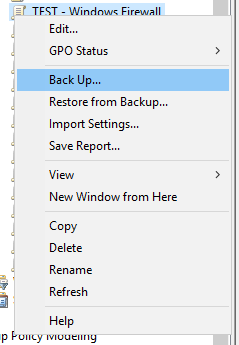
  • Right click on your GPO and select Back Up
  • Give it a location to put the backup
…

Read More Read More

Convert a system with VMware Converter

Convert a system with VMware Converter

November 28, 2020

There are a few ways to convert a system either P2V (Physical to Virtual) or V2V (Hyper V to VMware). This will show you how to convert a system using VMware vCenter Converter Standalone Client.

Before you start you should check a few things to make the whole process streamlined.

  1. Check that the system is fully up to date (you might get stuck in an update trap if you don’t)
  2. Check that you have remote access to the system (so that if needed you can at least get back into the system easily)
  3. Make a note of the IP configurations (you will likely need to re add them)
  4. If the system a domain member make sure that you know the local admin username and password (this is so that if it fails to talk to the domain you at least have a way back into the system)
  • Install VMware vCenter Converter Standalone Client on the system you will be converting.
  • Run VMware vCenter Converter Standalone Client as Admin
  • Click on Convert machine
…

Read More Read More

Install VCSA Updates

Install VCSA Updates

November 28, 2020

Here is how to update VCSA (vCenter Server Appliance specifically version 7) with the web UI

  • Make sure you have a backup of your VCSA. I like to have a backup and a snapshot to be extra safe.
  • Click on you VCSA server
  • Click on the Update tab
  • In Update Planner select the update you want to install and click on Generate Report and select Interoperability. (this will check and make sure everything is compatible in your VCSA setup)
…

Read More Read More

Adding a host to VCSA

Adding a host to VCSA

November 27, 2020

Here is how to add a host to VCSA (vCenter Server Appliance specifically version 7)

  • Right click on the location where you want to add the host and click Add Host
…

Read More Read More

ESXi changing the host name

ESXi changing the host name

November 27, 2020

Here is how to change the host name in ESXi (specifically ESXi 7)

  • Click on Networking
  • Click on TCP/IP stacks
  • Click on the Default TCP/IP stack
…

Read More Read More

ESXi Setting a static IP

ESXi Setting a static IP

November 27, 2020

Here is how to set a static IP in ESXi

  • Go to Networking
  • Click on VMkernel NICs
  • Click on vmk0
…

Read More Read More

Windows Updates PowerShell Script

Windows Updates PowerShell Script

November 23, 2020

There have been a lot of critical exploits over the last few months. Really the best way to deal with that is Windows Updates. Now I can hear you complaining that Windows Updates left untamed will just reboot your servers randomly or I don’t want to build WSUS or my RMM doesn’t patch well and it sucks and <insert your excuse here>.

Well I’ve created a PowerShell script that I called DK Win Updates that will help solve the issue. It uses the Windows Update Agent API to search for updates and guess what you can run this as .ps1 file, you could build a scheduled task to run it, you can toss it in your RMM and run it as a script. (if your RMM can’t do that, you should find a new RMM).

…

Read More Read More

Aruba 2930F Switch Firmware Upgrade

Aruba 2930F Switch Firmware Upgrade

November 15, 2020
  • Download the newest firmware
  • SSH into the switch
  • verify your setup by using show version, show flash, and show config files
…

Read More Read More

Disable Auto Windows Updates

Disable Auto Windows Updates

July 25, 2020

Auto Windows updates are annoying especially when left untamed as it will automatically reboot the device be it a workstation or a server. I’ve written a script that can mass disable Windows updates across all devices even if they aren’t domain joined.

Technically you could go in and disabled the Windows Update service but that stops all Windows updates. I don’t think that’s a good idea.

Another way would be to bring up Group Policy Editor and go to Computer Configuration > Administrative Templates > Windows Components > Windows Updates > Configure Automatic Updates and set that to be disabled.

However that option will work for domain joined devices but what about the non domain joined devices. It doesn’t make much sense to go to each device and manually edit the setting via the Local Group Policy Editor. To solve this issue I’ve written a script that could be ran across all devices including domain joined device and would leave other Windows updates settings in place.

…

Read More Read More

Posts navigation

OLDER POSTS
NEWER POSTS

About Me

Daniel Keer

Project Lead, Senior Consultant at Digitally Accurate Inc.

Awards and Certificates
VMware vExpert ⭐⭐⭐
Omnissa Tech Insider ⭐⭐⭐

Consulting

Stuck on something? Reach out to Digitally Accurate Inc. and we can provide expert IT consulting to help you move forward.

  • ESX Regenerate Self-Signed Certificate
  • Veeam Backup & Replication 13 Windows Install
  • Enable Windows 10 Extended Security Updates
  • slmgr.vbs
  • CyberChef
© 2026   Copyright. All Rights Reserved.