


I recently passed the VCP-VCF Architect exam, specifically the 2V0-13.25 version, and I want to share my experience with the VMware Certified Professional – VMware Cloud Foundation Architect exam.
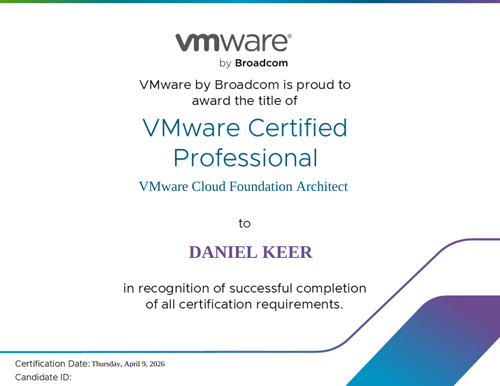
In this post, I will share my experience taking the VCP-VCF Architect exam and studying tips.
Exam Details
The VMware Cloud Foundation Architect 2V0-13.25 exam contains 60 multiple-choice questions, and you have 135 minutes to complete the exam. You need a score of 300 points or higher to pass the exam. The exam may contain unscored questions (you won’t know which questions are unscored).
During the exam, you can flag questions you are unsure about for review, so you can circle back to them before submitting the exam for grading. To help narrow down your choices, you can right-click an answer to add a strikethrough.
The 60 questions you get are pulled from a pool of questions, meaning if two people take the exam, they may not have the same questions.
Studying
The way I prepared for the VCF Architect exam was a bit different from how I prepared for the VCF Admin exam. There was a weekly study session, but unfortunately, there was only one session. The study session was recorded and posted to YouTube. Here is the YouTube playlist of the VCF Architect exam study session.
There’s also an exam guide published by Broadcom, you can find the official exam guide here. The study session covers sections 1 and 2 from the exam guide. I found that the study session was fundamental for preparing me for the exam.
I didn’t realize until after I took the exam that there is a VMware Cloud Foundation 5.2 Architect (2V0-13.24) VMware {code} Community Exam Guide, which is a Google Doc and can be found here. The VMware {code} Community Exam Guide is a copy of the official exam guide, but it has notes and details about each tested section to help you study. While the community exam guide is based on VCF 5.2, the core concepts remain the same.
My Thoughts
The VCF Architect exam can sound very daunting because of the word architect, but don’t let that scare you off. I actually found it a bit easier than the VCF Administrator exam.
I did take this exam a bit more blind than the VCF admin exam, but not totally blind. I don’t think I could’ve passed this exam fully blind. I think the core reason I passed is that I’ve been reading and experimenting extensively with VCF, and I’ve had to plan and deploy various IT solutions while communicating high-level plans to both technical and non-technical stakeholders.
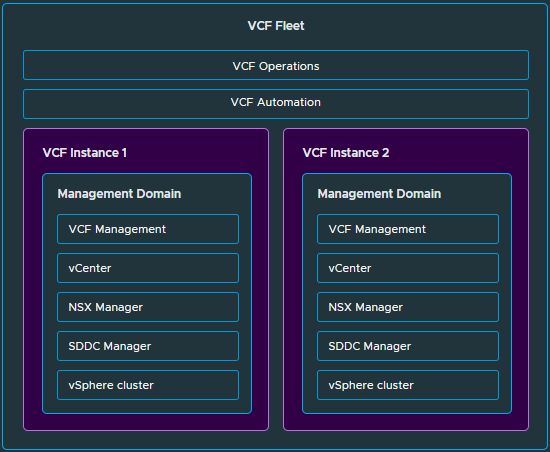
A big thing to remember is that a VCF Fleet can have more than one VCF Instance, and each VCF Instance can share some of the VCF Fleet components.
Another thing to remember is how each part of AMPRS (Availability, Manageability, Performance, Recoverability, and Security) differs from the others. AMPRS is sometimes also called RAMPS. I also recommend understanding how technical and business requirements differ.
I recommend that you also make sure you understand the differences between a conceptual design, a logic design, and a physical design, as it’s a core part of the exam. Here’s a quick refresher.
- Conceptual design is the high-level solution design that includes all requirements (business and technical), constraints (for example, the need to use existing storage), risks and how you will mitigate them, and any assumptions and how you will validate them.
- Logical design builds on the conceptual design and includes design decisions, while keeping technical details at a high level. It also includes the reasons for a design decision.
- Physical design builds on the logical design and contains all the technical details.
If you are planning to take the exam, I highly recommend using the studying resources I used. You can also join the Broadcom Community Programs Discord server, as there are a few channels about certifications. Here is the Discord server invite link https://discord.gg/cAgPKfAPnd
For more information about the VMware Cloud Foundation Architect exam, here is the official exam page.
If you are ready to book your exam, my blog post, Schedule VMware Exam, details the entire process.